

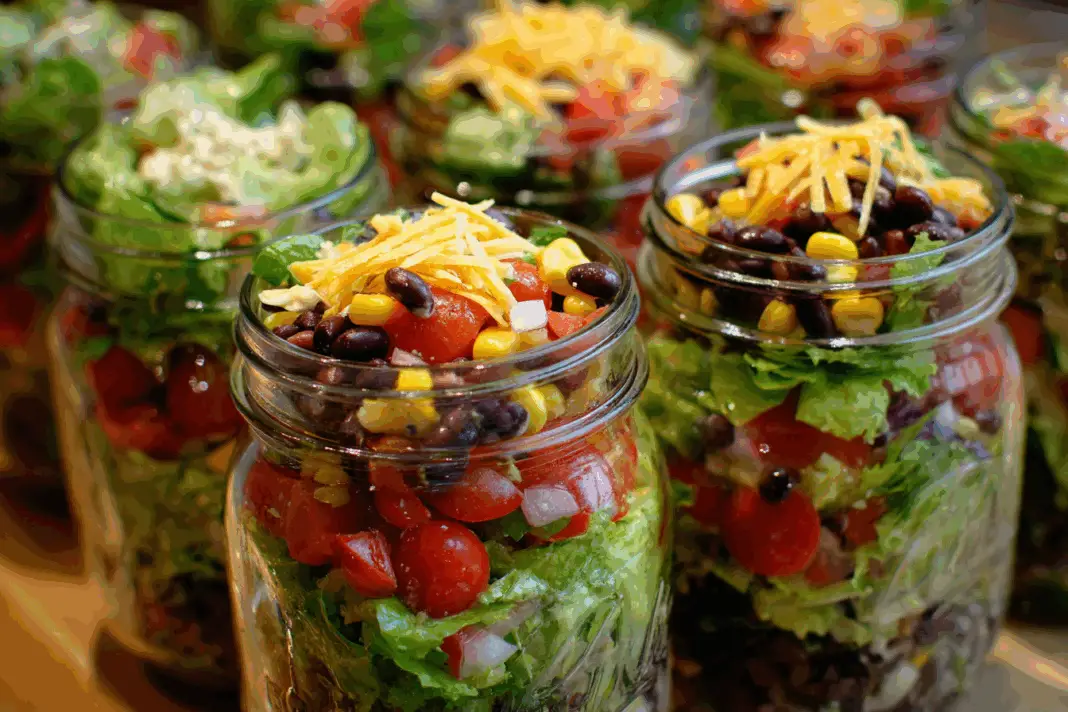
Making lunch every single day gets exhausting, especially when that sad desk salad turns into wilted lettuce by noon. The secret to having fresh, crisp salads ready whenever hunger strikes isn’t some fancy storage system—it’s knowing how to layer ingredients properly in a simple mason jar. This Southwest black bean salad stays perfectly fresh for up to seven days, giving anyone the power to meal prep like a pro without any soggy disappointments.
Dressing always goes on the bottom first
Most people make the mistake of adding dressing last, just like they would with a regular salad. Mason jar salads work completely differently—the dressing needs to go in first, settling at the very bottom of the jar. This creates a protective barrier that keeps everything else fresh and prevents the dreaded soggy lettuce syndrome that ruins so many packed lunches.
The magic happens because when the jar sits upright in the fridge, gravity keeps all the wet ingredients separated from the delicate greens. This layering technique means day seven lettuce looks just as crisp and vibrant as day one. For this Southwest salad, a zesty salsa-ranch dressing provides the perfect tangy base that actually helps marinate the beans and corn while everything sits together.
Wide mouth jars make packing so much easier
Regular mouth mason jars seem like they’d work fine, but anyone who’s tried stuffing ingredients through that narrow opening knows the frustration. Wide mouth jars give enough space to actually layer ingredients properly without everything getting jumbled together. The 24-ounce pint-and-a-half size works perfectly for a filling lunch that doesn’t require a mixing bowl to eat.
Ball makes plastic storage caps specifically for mason jars that don’t rust like the metal lids do with frequent washing. These plastic lids also seal tighter and won’t corrode from acidic dressings over time. Having the right jar setup makes the difference between a system that actually works long-term versus something that becomes more trouble than it’s worth.
Pack ingredients extremely tight for maximum freshness
The tendency is to gently place ingredients in the jar like building a delicate tower, but that leaves too much air space. Air circulation makes vegetables wilt faster, so the goal is stuffing as much as physically possible into every inch of space. The lettuce should be so tightly packed that it springs out like a jack-in-the-box when the lid comes off.
This tight packing serves a dual purpose—it maximizes the amount of vegetables per jar while creating an almost vacuum-sealed environment that keeps everything fresh longer. Even if the jar tips over in a lunch bag, nothing shifts around or gets mixed up when it’s packed properly. Proper packing means holding down the lettuce with one hand while screwing on the lid with the other.
Layer sturdy vegetables right after the dressing
Black beans and corn kernels can handle sitting in dressing without falling apart, making them perfect for the second layer. These hearty ingredients actually benefit from marinating in the salsa-ranch mixture, absorbing those Southwest spices and getting more delicious as the days pass. Cherry tomatoes also work well in this layer since their skin protects the flesh from getting mushy.
The key is choosing ingredients that either improve with marinating or won’t suffer from contact with moisture. Diced bell peppers, red onions, and jalapeños all maintain their crunch and actually develop better taste when they sit in the dressing. This strategic layering turns what could be a disadvantage into a major benefit for building deeper taste throughout the week.
Cheese needs to stay away from wet ingredients
Shredded cheddar cheese belongs in the middle layers, safely above the dressing but below the lettuce. Cheese that sits directly in dressing gets soggy and clumpy, losing that satisfying texture that makes it worth adding in the first place. The middle position keeps it dry while still allowing easy mixing when the jar gets dumped out for eating.
Pre-shredded cheese works fine for convenience, but block cheese that gets grated fresh holds its texture better over several days. When animal products like cheese get added to mason jar salads, the safe storage time drops from a full week to about 3-5 days. Cheese placement makes the difference between a salad that stays appetizing versus one that turns into a unappetizing mess.
Romaine lettuce stays crisp longer than other greens
Delicate greens like spinach or mixed baby lettuce start wilting within a few days, even with perfect layering technique. Romaine lettuce has enough structure to maintain its crunch for the full week, making it the best choice for mason jar salads. The sturdy leaves also handle the tight packing better without getting bruised or damaged.
Chopping the romaine into bite-sized pieces before packing makes eating easier and helps fit more greens into the jar. Washing and thoroughly drying the lettuce before assembly prevents excess moisture that could cause premature wilting. Romaine preparation sets up the foundation for salads that actually deliver on the promise of week-long freshness.
Dump everything out instead of eating from the jar
The Instagram-worthy photos of people eating directly from mason jars look cute, but they don’t work practically. The narrow opening makes it impossible to mix everything properly, and the dressing stays stuck at the bottom. Smart meal preppers keep a bowl at their desk or in their bag specifically for dumping out their jar salads.
When the jar gets flipped upside down onto a plate or bowl, the lettuce comes out first and the dressing lands on top—exactly like a freshly made salad. Everything mixes together perfectly with just a quick toss. Proper serving transforms the jar from a storage container into a delivery system for a restaurant-quality lunch that took minutes to prepare days earlier.
Keep jars completely upright for best results
Even with tight packing, mason jar salads need to stay upright during storage and transport to maintain their layered structure. Tipping the jar on its side allows the dressing to creep up and start making contact with ingredients that should stay dry. This means being strategic about where the jars go in the fridge and how they travel to work or school.
Many lunch bags have specific compartments or pockets designed to keep bottles and jars upright during transport. For car commuters, a small box or container in the passenger seat prevents rolling around on turns. Upright storage protects all the careful layering work and ensures each salad tastes as good as intended when lunchtime arrives.
Label jars with contents and dates for easy tracking
Making multiple salads means keeping track of what’s in each jar and when it was made, especially when experimenting with different recipes. Writing directly on the glass with a Sharpie marker works perfectly and comes off easily with rubbing alcohol when it’s time to clean the jars. This simple labeling system prevents any guessing games about which jar is which.
Dating the jars helps ensure food safety, particularly when they contain cheese or other perishable ingredients that don’t last the full week. Masking tape labels work too but tend to fall off in the fridge or get soggy from condensation. Smart labeling turns meal prep from a chaotic guessing game into an organized system that actually saves time and prevents waste.
This Southwest black bean mason jar salad proves that healthy eating doesn’t have to mean spending every morning chopping vegetables or settling for sad desk lunches. With just one prep session, anyone can have fresh, satisfying salads ready for an entire week. The combination of protein-rich black beans, crisp vegetables, and zesty dressing creates a lunch that’s actually exciting to eat, day after day.
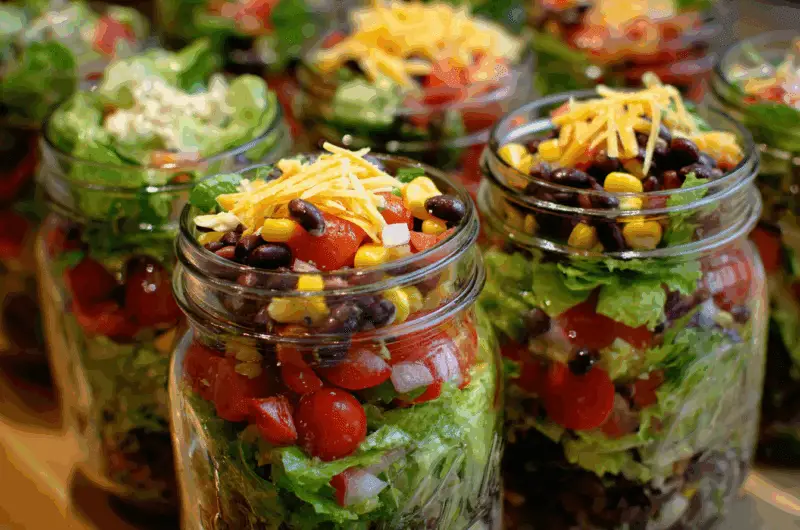
Southwest Black Bean Mason Jar Salad
Course: Lunch4
servings15
minutes285
kcalA vibrant, protein-packed salad that stays crisp and fresh for up to 7 days with layers of black beans, corn, cheese, and crisp romaine in zesty salsa-ranch dressing.
Ingredients
6 tablespoons ranch dressing
2 tablespoons salsa
1 can (15 oz) black beans, drained and rinsed
1 cup corn kernels (fresh, frozen, or canned)
1 cup cherry tomatoes, halved
1/2 red bell pepper, diced
1/4 red onion, finely diced
1 cup shredded cheddar cheese
6 cups romaine lettuce, chopped
Directions
- Mix ranch dressing and salsa together in a small bowl until well combined. This creates the salsa-ranch dressing that will marinate the vegetables and provide amazing Southwest flavor. Divide the dressing evenly between four 24-ounce wide-mouth mason jars, placing it at the very bottom of each jar.
- Layer the black beans directly on top of the dressing in each jar, using about 1/3 cup per jar. The beans will absorb the dressing over time, developing incredible flavor. Make sure to drain and rinse canned beans thoroughly to remove excess sodium and prevent the salad from becoming too salty.
- Add the corn kernels as the next layer, distributing about 1/4 cup per jar. If using frozen corn, thaw it completely and pat dry with paper towels to remove excess moisture. Fresh corn cut from the cob works beautifully and adds great crunch and sweetness to balance the savory elements.
- Layer the halved cherry tomatoes, diced red bell pepper, and red onion on top of the corn. These vegetables add color, crunch, and fresh flavor while being sturdy enough to hold up well in the dressing. Cut vegetables into uniform, bite-sized pieces for the best eating experience.
- Sprinkle the shredded cheddar cheese evenly over the vegetables in each jar, using about 1/4 cup per jar. Keep the cheese away from the wet dressing at the bottom to prevent it from becoming soggy and clumping together. Position it in the middle layer where it stays dry but mixes well when the salad is served.
- Wash and thoroughly dry the romaine lettuce, then chop it into bite-sized pieces. Pack the lettuce tightly into the top of each jar, using about 1 1/2 cups per jar. Press down firmly while adding the lettuce to remove as much air as possible and create a tight seal that keeps everything fresh.
- Continue packing lettuce until each jar is completely full, leaving no air space at the top. The lettuce should be so tightly packed that you need to hold it down with one hand while screwing on the lid with the other. This tight packing is crucial for maintaining freshness throughout the week.
- Secure the lids tightly and store the jars upright in the refrigerator for up to 5 days due to the cheese content. When ready to eat, dump the entire contents of one jar onto a plate or into a bowl, allowing the dressing to naturally coat all ingredients. Toss gently and enjoy immediately for the best taste and texture.
Notes
- Use 24-ounce wide-mouth mason jars for easiest packing and best portion sizes
- Write contents and date on jars with Sharpie marker for easy tracking
- Store jars upright at all times to prevent dressing from mixing with other ingredients
- For longer storage without cheese, these salads last up to 7 days
- Avoid adding avocado until serving day as it will brown quickly
Frequently Asked Questions
Q: Can I use different types of beans in this Southwest salad?
A: Absolutely! Pinto beans, kidney beans, or chickpeas work great as substitutes for black beans. Each type brings a slightly different texture and flavor profile, but all hold up well in the mason jar format and absorb the salsa-ranch dressing beautifully over time.
Q: How do I prevent the lettuce from getting soggy if I accidentally tip the jar?
A: If a jar tips over briefly, stand it upright immediately and gently shake it to redistribute the layers. The tight packing usually prevents major mixing, but check the lettuce at the top—if it looks wet, use that jar first since it won’t last as long as the others.
Q: Can I make these salads without the cheese to make them last longer?
A: Yes! Omitting the cheese extends the storage time from 5 days to a full week. The salad is still delicious and filling with just the black beans providing protein. You can always add fresh cheese when serving if you want that extra richness and calcium.
Q: What other dressings work well with this layering method?
A: Any thick, creamy dressing works perfectly—try Caesar, blue cheese, or avocado lime. Avoid thin vinaigrettes as they tend to seep up through the layers more easily. The key is choosing dressings thick enough to stay put at the bottom while still coating everything when mixed.
