

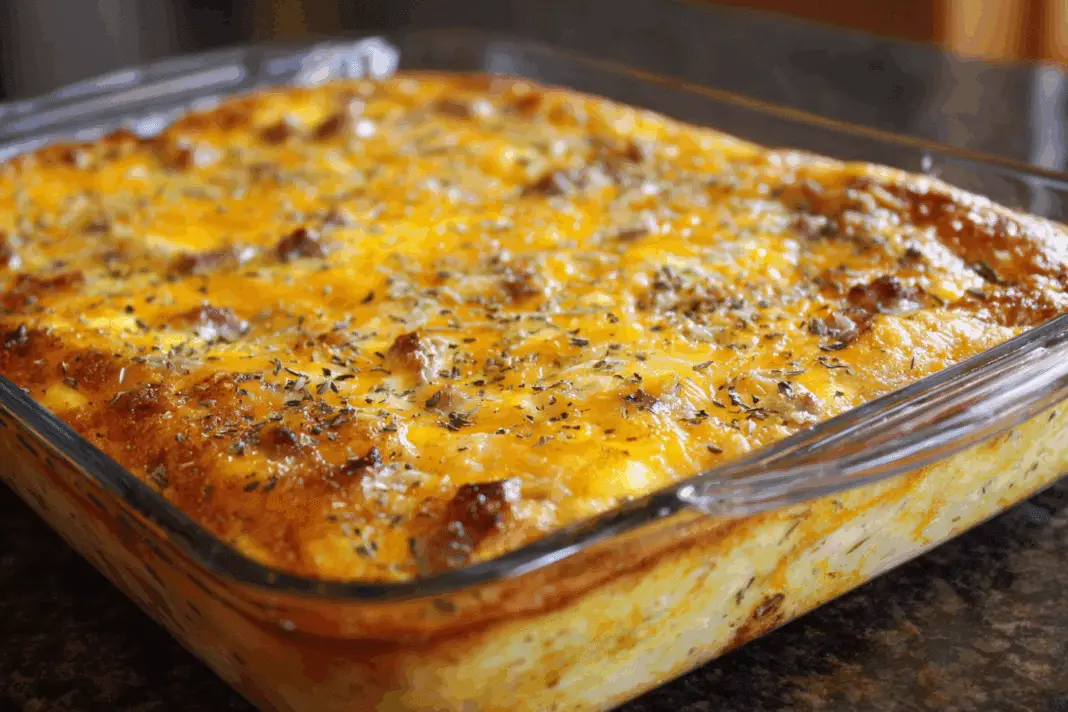
Most people think making breakfast for a crowd means getting up at dawn and standing over a hot stove flipping pancakes or scrambling eggs for an hour. What if there was a way to feed everyone a hot, delicious breakfast without all the morning chaos? This customizable egg casserole changes everything about how you handle busy mornings, holiday breakfasts, or feeding houseguests.
Most people skip the make-ahead prep step
The biggest mistake people make with breakfast casseroles is trying to throw everything together the morning they need it. Sure, you can do that, but you’re missing the whole point. The real magic happens when you prepare this casserole the night before and let it sit in the fridge overnight. This allows all the ingredients to meld together perfectly.
When you prepare the casserole ahead of time, the eggs absorb the seasonings better, and you wake up to just pop it in the oven. No morning stress, no rushing around trying to feed everyone while they’re asking when breakfast will be ready. Just slide it into the oven and focus on making coffee or setting the table.
Using the wrong pan size ruins the texture
Nothing ruins a perfectly good egg casserole like using the wrong baking dish. Too small and your casserole will be thick and take forever to cook through, leaving you with runny centers and overcooked edges. Too large and you’ll end up with a thin, rubbery mess that looks more like a sad omelet than a fluffy casserole.
A 9×13 inch baking dish is the sweet spot for this recipe. It gives you the perfect depth for 18 eggs to cook evenly and create that ideal fluffy texture everyone loves. Make sure to butter the dish well – nobody wants to serve a casserole that’s stuck to the pan in chunks. The melted butter also adds extra richness that makes every bite better.
People forget the secret ingredient that makes it fluffy
Here’s what separates an okay egg casserole from an amazing one: sour cream. Most people just throw eggs and milk together and call it good, but they’re missing this game-changing ingredient. Sour cream adds tanginess and creates an incredibly fluffy texture that regular milk alone just can’t achieve.
The combination of sour cream and milk creates the perfect creamy base for your eggs. Don’t try to substitute Greek yogurt or cream cheese – sour cream has the right consistency and tang to make this casserole special. Mix it well with the eggs until everything is completely smooth and frothy for the best results.
Skipping the dried mustard is a huge mistake
When people see dried mustard in an egg recipe, they often think it’s optional or weird. This is a massive mistake! Dried mustard doesn’t make your eggs taste like mustard at all. Instead, it acts like a flavor enhancer that makes all the other ingredients taste better and more vibrant.
Just half a teaspoon of dried mustard transforms the entire dish from bland to amazing. It adds depth without any recognizable mustard taste. Think of it like salt – it doesn’t make things taste salty, it makes them taste more like themselves. Don’t skip this ingredient, even if you hate mustard. Trust the process and watch how it elevates your casserole.
Adding cheese at the wrong time creates clumpy messes
Cheese timing matters more than most people realize. Dump the cheese into your egg mixture too early and it clumps up into weird, stringy blobs that don’t distribute evenly. Add it too late and it doesn’t have time to melt properly throughout the casserole.
The perfect method is to pour your egg mixture into the pan first, then sprinkle the cheese on top and gently press it down into the eggs with a spoon. This way, the cheese melts evenly throughout the casserole as it bakes, creating that perfect cheesy bite in every forkful without any unwanted clumps.
Not customizing it to your family’s preferences
The beauty of this casserole is how adaptable it is, but many people stick to the basic recipe and miss out on making it perfect for their family. Got picky eaters? Leave out the extras and keep it simple. Have meat lovers? Add crumbled bacon, cooked sausage, or diced ham. Want more veggies? Toss in some peppers, onions, or spinach.
The key is to cook any raw ingredients before adding them to the casserole. Raw vegetables release water as they cook, which can make your casserole watery. Pre-cook your sausage, bacon, or vegetables to ensure they don’t mess up the texture of your perfect egg base. This customization makes the casserole feel like it was made specifically for your family.
Baking at the wrong temperature ruins everything
Temperature control is crucial for egg casseroles. Too hot and the edges cook too fast while the center stays runny. Too cool and you’re waiting forever for it to set properly. The magic number is 350 degrees – hot enough to cook the eggs through but gentle enough to keep them fluffy and creamy.
Watch for that golden brown top as your signal that it’s done. The casserole should look set and not jiggly when you gently shake the pan. If you have a thermometer, the internal temperature should read 160 degrees. Don’t open the oven door too often while it’s baking – this drops the temperature and can cause uneven cooking.
Cutting into it too soon makes it fall apart
Everyone’s hungry and the casserole smells amazing, but cutting into it straight from the oven is a recipe for disaster. Hot eggs need time to set up properly, or you’ll end up with a runny mess that doesn’t hold together when you try to serve it. This is especially frustrating when you’re trying to impress guests.
Let the casserole rest for 5-10 minutes after taking it out of the oven. This short wait allows the eggs to finish setting and makes clean, neat squares that look as good as they taste. Use this time to get your serving utensils ready and pour the coffee – by the time you’re done, the casserole will be perfect for cutting.
People don’t realize how well it freezes and reheats
Most people think egg casseroles are a one-and-done deal, but this recipe is perfect for meal prep. You can make a huge batch, cut it into portions, and freeze them for quick breakfasts later. It’s like having homemade frozen breakfast burritos, but better and easier to reheat.
To freeze properly, let the casserole cool completely, then cut it into serving-sized pieces. Place them on a parchment-lined baking sheet and freeze for an hour before transferring to freezer bags. This prevents the pieces from sticking together. When you want breakfast, just microwave a piece for 30 seconds to a minute and you’re good to go. It keeps for up to three months in the freezer.
This egg casserole solves the eternal problem of feeding a crowd without spending your entire morning in the kitchen. The make-ahead convenience combined with endless customization options makes it perfect for holiday mornings, weekend guests, or even regular weekday breakfasts when you prep it ahead. Once you master this recipe, you’ll wonder how you ever managed busy mornings without it.
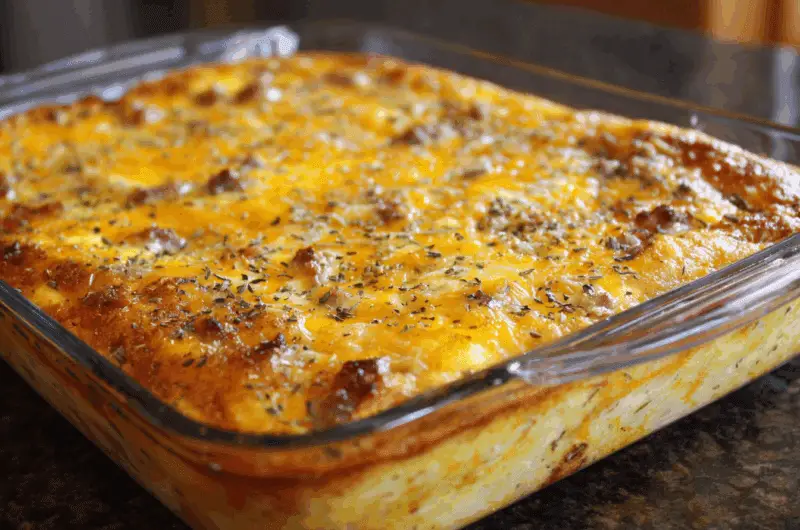
Easy Breakfast Egg Casserole
Course: Breakfast12
servings10
minutes35
minutes285
kcalThis fluffy, customizable egg casserole feeds a crowd and can be made ahead for stress-free mornings.
Ingredients
2 tablespoons butter, melted
18 large eggs
1 cup sour cream
1 cup whole milk
1 teaspoon salt
1/4 teaspoon black pepper
1/2 teaspoon dried mustard
2 cups shredded cheddar cheese
Optional: cooked bacon, sausage, ham, or vegetables
Directions
- Preheat your oven to 350°F. Melt the butter and use it to thoroughly coat the bottom and sides of a 9×13 inch baking dish. This prevents sticking and adds extra richness to the casserole.
- In a large bowl or blender, combine the eggs, sour cream, milk, salt, pepper, and dried mustard. Blend or whisk vigorously until the mixture is completely smooth and frothy. The sour cream should be fully incorporated with no lumps remaining.
- Pour the egg mixture into the prepared baking dish. The mixture should spread evenly across the bottom of the pan. Make sure the dish is level so the casserole cooks uniformly.
- Sprinkle the shredded cheese evenly over the top of the egg mixture. If using any optional ingredients like cooked bacon or vegetables, add them now. Gently press the toppings down into the eggs with a spoon or spatula.
- At this point, you can cover the dish with plastic wrap and refrigerate overnight for make-ahead convenience. This allows the flavors to meld and makes morning prep even easier.
- Bake the casserole for 30-40 minutes, or until the top is golden brown and the center is set. The casserole should not jiggle when you gently shake the pan. Internal temperature should reach 160°F.
- Remove from oven and let the casserole rest for 5-10 minutes before cutting. This allows the eggs to finish setting up and makes clean, neat squares for serving.
- Cut into squares and serve immediately. Store any leftovers in the refrigerator for up to 4 days, or freeze individual portions for up to 3 months.
Notes
- For best results, use room temperature eggs as they blend more easily with the other ingredients.
- If adding vegetables like onions or peppers, sauté them first to remove excess moisture that could make the casserole watery.
- This recipe can easily be halved and baked in an 8×8 pan for smaller families, just reduce the cooking time to 25-30 minutes.
Frequently asked questions
Q: Can I use a different type of cheese in this casserole?
A: Absolutely! While cheddar works great, you can substitute with Swiss, Monterey Jack, or a cheese blend. Just make sure to use the same amount and avoid pre-shredded cheese if possible, as it doesn’t melt as smoothly as freshly grated cheese.
Q: What if I don’t have sour cream on hand?
A: While sour cream creates the best texture, you can substitute with an equal amount of plain Greek yogurt or cream cheese that’s been softened and mixed well. The texture will be slightly different, but still delicious.
Q: How do I know when the casserole is fully cooked?
A: The top should be golden brown and the center should be set – not jiggly when you gently shake the pan. A knife inserted in the center should come out mostly clean, and the internal temperature should reach 160°F on a meat thermometer.
Q: Can I make this casserole in a smaller pan?
A: Yes! You can halve the recipe and use an 8×8 inch pan instead. Just reduce the cooking time to about 25-30 minutes and check for doneness a bit earlier. The casserole will be thicker, so it may need a few extra minutes.
