

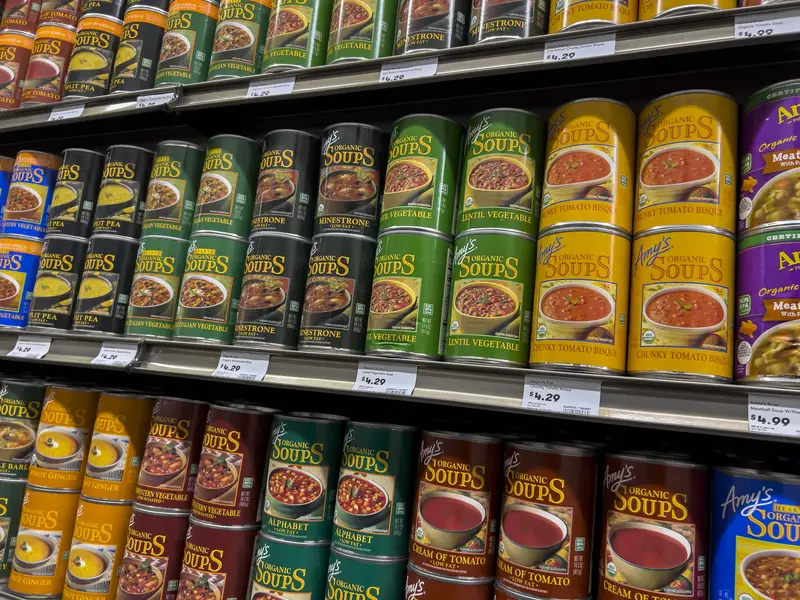
That can of soup sitting in your pantry might seem like a convenient lunch option, but what’s actually inside could surprise you. Most people grab canned soup without reading the label, trusting that it’s a reasonable meal choice. However, many popular brands pack their cans with ingredients you’d probably skip if you knew what they were. Some of these additives have confusing names that sound harmless but aren’t exactly what you’d use if you made soup at home. Once you know what to watch out for, shopping for canned soup becomes a completely different experience.
Sodium levels that exceed your daily limit
Most canned soups contain shockingly high amounts of salt, and it’s not just a little over the recommended amount. When you check the numbers, some brands pack almost two full days’ worth of sodium into a single can. Snow’s New England Style Clam Chowder has 3,020 milligrams of sodium per can, while Campbell’s Cream of Chicken comes in at 2,175 milligrams. Even if you think you’re making a healthier choice with plant-based options, Gardein’s Be’f & Vegetable Soup still contains 1,130 milligrams. The average person already gets about 3,500 milligrams of sodium daily, way more than the recommended 2,300 milligrams.
The tricky part is that many cans list multiple servings, so you might not realize you’re eating all that sodium at once. Looking for low-sodium options means finding soups with 140 milligrams or less per serving, which is surprisingly hard to find. Health Valley Organic No Salt Added Minestrone manages to keep it around 100 milligrams per can, but that’s rare. Even soups labeled as “reduced-sodium” can still have way too much salt because manufacturers use it as both a preservative and a taste enhancer. Reading that nutrition label becomes essential when you realize how much sodium sneaks into what seems like a simple bowl of soup.
Hidden sodium with different ingredient names
Checking for the word “sodium” on a label is just the beginning because salt hides under many different names. Manufacturers add ingredients like monosodium glutamate, disodium phosphate, and sodium phosphate, which all contribute to your total salt intake. These additives serve various purposes beyond adding a salty taste. MSG enhances the overall sensation of eating the soup, making it more satisfying to your brain. Disodium phosphate helps maintain the right acidity level so the soup tastes consistent every time you open a can. Sodium phosphate acts as a thickener and extends how long the soup can sit on store shelves without going bad.
You might also spot sodium citrate, sodium nitrate, sodium benzoate, or sodium caseinate on ingredient lists. Each of these adds to the total sodium content, even if they’re listed separately from regular salt. When you add up all these sodium-containing ingredients, that seemingly modest sodium number on the nutrition facts can actually be much higher. Some soups have five or six different sodium-based additives, which means you’re getting salt from multiple sources in every spoonful. This is why checking both the ingredient list and the nutrition label matters when you’re trying to watch your salt intake.
Sugar content comparable to a dessert
Soup shouldn’t taste like candy, but some brands add surprising amounts of sugar to their cans. Campbell’s Tomato Bisque contains 37.5 grams of sugar per can, which is more than six regular Oreo cookies or a serving of Ben & Jerry’s ice cream. That’s right—your lunch might have more sugar than dessert. Tomato-based and squash soups tend to have the highest sugar content, but it shows up in unexpected places throughout the soup aisle. Sugar makes soups taste better and can balance out the saltiness, but it also means you’re eating way more than you realize. Most people expect cookies and ice cream to be loaded with sugar, so they don’t think twice about eating them occasionally.
What makes this worse is that sugar appears under many different names on ingredient labels. You might see sucrose, dextrose, maltose, fructose, high fructose corn syrup, or barley malt listed. Some ingredient lists include multiple types of sugar, which adds up fast. The recommended daily limit for added sugar is 36 grams for men and 25 grams for women, so one can of that tomato bisque puts you over the limit before you’ve eaten anything else. Checking the sugar content becomes just as important as checking sodium when you’re standing in the soup aisle trying to pick something reasonable for lunch.
Serving sizes that don’t match reality
Opening a can of soup for lunch seems straightforward until you notice the serving size on the label. Many cans list their contents as 2 or 2.5 servings, which means all those nutrition numbers need to be multiplied. That can of Campbell’s Tomato Soup sitting on your desk isn’t actually one serving—it’s technically two and a half servings according to the label. Most people don’t measure out half a can and save the rest for another day. They eat the whole thing because that’s what makes sense for a meal. This serving size trick makes the sodium, sugar, and calorie counts look much lower than what you’re actually consuming when you finish the entire can.
The weight listed on the can compared to the serving size reveals there’s often more than the stated number of servings inside. A can that claims to have 2.5 servings might actually contain closer to 3 when you do the math. Some brands do offer single-serving cans that are labeled “as packaged,” like Progresso’s high-protein soups, which makes the nutrition information more straightforward. When you’re comparing different canned soup options, you need to calculate what you’ll actually eat rather than trusting the per-serving numbers on the front of the label. This is why people get frustrated with nutrition labels—the information is there, but requires extra work to figure out what you’re really consuming.
Creamy soups loaded with saturated fat
Thick, creamy soups taste great on cold days, but they often get that texture from ingredients you might not want to eat regularly. When you make homemade chowder, you might add a bit of cream or butter, and you know exactly how much goes in. Canned creamy soups use various thickening ingredients to achieve that rich consistency, including cream, full-fat milk, and cheese. These ingredients add saturated fat, which is the type that tends to stick around in your body. While you can enjoy creamy soups occasionally, eating them frequently from a can means you’re getting a lot more of these fats than you might realize.
The problem is that manufacturers don’t always use real dairy products to create that creamy texture. Some use combinations of oils, starches, and other thickening agents that contribute saturated fat without adding much actual food value. Looking for soups with less than 4 grams of fat per serving helps you avoid the ones that go overboard with thickening agents. Remember that “per serving” detail, though—if the can contains 2.5 servings and you eat the whole thing, you need to multiply that fat content. Cream-based soups from a can differ significantly from ones you’d make at home because the fat sources aren’t always what you’d expect or choose yourself.
Artificial additives and synthetic ingredients
Reading through ingredient lists on canned soups often reveals additives you’ve never heard of before. Many contain artificial colors, synthetic flavors, and various preservatives that extend shelf life. What’s confusing is that ingredients labeled as “natural flavors” might not be much different from artificial ones. According to food chemists, natural flavors must come from plant or animal sources, but they’re still created in a lab and processed extensively. The chemical structure of natural and artificial flavors can be identical—the only difference is the original source material. These additives make soup taste more appealing and last longer on shelves, but they’re not ingredients you’d find in your kitchen.
Some of these artificial additives include FD&C colors, phosphates, and sulfites. The purpose of adding these synthetic flavors goes beyond just making food taste better—they’re designed to make you want to eat more. Ingredients like sodium phosphate work as both a preservative and a thickener, while artificial colors make the soup look more appetizing in the bowl. If you’re trying to eat more real food and fewer processed ingredients, checking for these additives helps you avoid the soups that are furthest from what you’d make at home with actual vegetables, meat, and simple seasonings.
MSG hiding under different names
Monosodium glutamate shows up in many canned soups as a way to boost the overall taste. While it’s considered safe by regulatory agencies, MSG affects people differently, and some experience headaches, nausea, or trouble sleeping after eating it. The bigger issue is that MSG doesn’t always appear on labels as “monosodium glutamate.” It hides under other names like yeast extract, autolyzed yeast, hydrolyzed protein, sodium caseinate, and even “natural flavors” or “spices.” Some innocent-sounding ingredients like rice syrup, milk powder, and vinegar might also trigger reactions in people who are sensitive to MSG, even though they don’t sound problematic.
Finding soup without MSG or its variations means reading the entire ingredient list carefully and recognizing these alternative names. The additive works by making food taste more satisfying to your brain, which explains why canned soup with MSG might seem more filling or tasty than homemade versions. If you notice you don’t feel great after eating certain soups, MSG or one of its related ingredients might be the reason. Manufacturers use it because it’s an inexpensive way to make processed food taste better without adding actual high-quality ingredients. When you spot these MSG-related terms on a soup label, you know the manufacturer is relying on additives rather than real ingredients to create taste.
Vegetable oils instead of real fats
Most canned soups use vegetable oils like corn, canola, soybean, cottonseed, sunflower, or grapeseed oil. These processed oils are cheap for manufacturers and have a long shelf life, which is why they’re so common in packaged foods. The problem is that these oils are high in omega-6 fatty acids, and most people already get way too much omega-6 compared to omega-3 in their regular diet. When you make soup at home, you might use olive oil, butter, or bacon grease to start your vegetables. Those fats taste better and have a more balanced nutritional profile than the highly processed vegetable oils in most canned soups.
Looking for soups made with better oils means searching for ones that list olive oil, coconut oil, avocado oil, or palm oil in the ingredients. Some brands use animal fats like beef tallow or chicken fat, which makes sense in meat-based soups. These omega-6 oils are so prevalent in processed foods that avoiding them completely is nearly impossible, but choosing soups without them helps reduce your overall intake. When you see soybean or canola oil near the top of an ingredient list, you know that the soup is relying on cheap processed oils rather than the fats you’d actually cook with at home. This is one more way that canned soup differs from homemade versions beyond just convenience.
Genetically modified ingredients and pesticide residue
Unless a soup is certified organic, it probably contains genetically modified ingredients. The most commonly modified crops are corn, soy, canola, and cotton, which means any ingredients derived from these plants are likely genetically engineered. This includes things like cornstarch, soybean oil, canola oil, corn syrup, and various other additives that come from these four crops. Non-organic canned soups also tend to have pesticide and herbicide residues from the farming process. These chemical residues come along with the vegetables and grains used to make the soup, and they don’t necessarily wash off during processing.
Checking for organic certification on soup labels is one way to avoid both genetic modification and pesticide residue. Organic soups cost more, but they’re made with ingredients grown without synthetic pesticides and herbicides. The Institute for Responsible Technology compiled a list of processed food ingredients that commonly come from genetically modified sources, and many of them appear in canned soups. If avoiding these ingredients matters to you, reading labels becomes even more important because genetic modification is so widespread in processed foods. Regular canned soup made with conventional ingredients will almost certainly contain some genetically modified components and pesticide residues from the industrial farming system.
Shopping for canned soup doesn’t have to be complicated once you know what to look for on those labels. The ingredients matter just as much as the taste, especially when you’re eating soup regularly. Some brands do make better options with simpler ingredients, lower sodium, and minimal additives. Taking an extra minute to read the label helps you avoid the soups that are more like processed food products than actual soup. When time is tight and you need something quick, having a few trustworthy brands in your pantry beats grabbing whatever’s on sale without checking what’s inside that can.
