

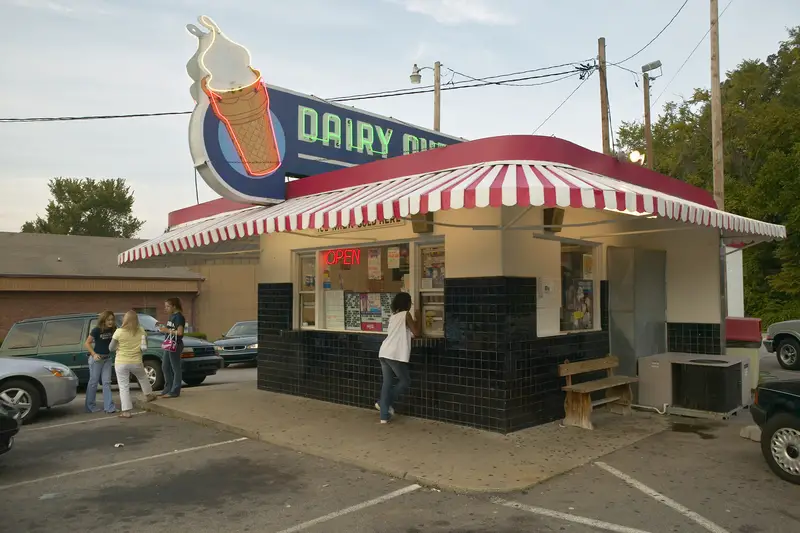
You’ve probably stood in a Dairy Queen drive-thru line a hundred times in your life. Maybe more. You ordered a Blizzard, a cone, a sundae — and every single time, you assumed you were eating ice cream. You weren’t. Not technically. Not legally. Not even close, actually.
This isn’t some internet conspiracy or a gotcha from a bored food blogger. Dairy Queen themselves will tell you this. The FDA will tell you this. The distinction has been hiding in plain sight for decades, and most of us never bothered to look.
The FDA Has a Very Specific Definition of Ice Cream
Here’s the thing about the United States government: they regulate everything. And that includes what you can and can’t call “ice cream.” According to the FDA, a frozen dairy treat must contain at least 10% butterfat to earn the official label of “ice cream.” Butterfat is the fat that naturally occurs in milk and cream — it’s what gives premium ice cream that rich, dense, coating-the-roof-of-your-mouth quality.
This isn’t a suggestion. It’s a legal standard. If your product sits below that 10% threshold, you can’t slap “ice cream” on the packaging, the menu, or the advertising. You have to call it something else.
And that’s exactly where Dairy Queen lands.
DQ’s Soft Serve Sits at Half the Required Butterfat
Dairy Queen’s soft serve contains roughly 5% milk fat. That’s half of what the FDA requires for the ice cream classification. Not 9%. Not 8%. Five percent. They’re not even flirting with the cutoff — they’re a full five percentage points short.
So what is it, then? It’s soft serve. That’s the category. Soft serve is its own thing, a distinct product that’s been around since the 1930s. It’s lighter, airier, and contains less fat than traditional ice cream. That lower fat content is actually part of what gives it that smooth, almost whipped texture that comes out of those machines in a perfect swirl.
Dairy Queen has never tried to hide this. They don’t advertise ice cream. They don’t call their cones “ice cream cones.” They’ve been carefully — and deliberately — using the term “soft serve” the entire time. We just weren’t paying attention.
Dairy Queen Has Known This From Day One
This isn’t a recent revelation that caught DQ off guard. According to people who’ve worked at the chain, Dairy Queen has never called their product ice cream. Former employees who spent years behind the counter say the company was always clear about this internally. The product was called “soft serve” or just “Dairy Queen” — never ice cream.
And if you go to the Dairy Queen website right now and poke around their FAQ section, they’ll tell you themselves. They address the question directly. They’re not ashamed of it, and they don’t dodge it. The company knows what they make, they know it doesn’t meet the FDA standard, and they’ve built an entire brand around it anyway.
That’s honestly kind of impressive. They’ve sold billions of dollars worth of a product that legally isn’t ice cream, and most of their customers had no idea.
It’s Not Just DQ — Most Soft Serve Fails the Test
Before you single out Dairy Queen as some kind of fraud operation, know that this applies to most soft serve you’ve ever eaten. That machine at the Chinese buffet? Probably not ice cream. The twist cone from the boardwalk? Almost certainly not ice cream. The vanilla swirl from the soft serve truck at your kid’s soccer game? Same deal.
Soft serve as a category tends to contain less than 10% butterfat. It’s kind of the whole point. The lower fat content, combined with the air that gets whipped into it during the freezing process (called “overrun” in the industry), is what gives soft serve its signature texture. If you pumped it full of the same butterfat as Häagen-Dazs, it wouldn’t come out of the machine the same way. It wouldn’t taste the same. It wouldn’t be soft serve anymore.
So the reduced fat isn’t a cost-cutting measure — it’s a feature. The product is designed that way on purpose.
What Butterfat Actually Does to Frozen Desserts
If you’ve ever eaten a spoonful of something like Ben & Jerry’s and then immediately tried DQ soft serve, you noticed the difference even if you couldn’t name it. That difference is largely butterfat.
Higher butterfat means a denser, richer, heavier product. It coats your tongue. It melts slower. It has a certain weight to it. Premium ice cream brands push well above the 10% minimum — some go up to 16% or even higher. That’s why a pint of super-premium ice cream can feel like a meal.
Lower butterfat means a lighter, smoother, more airy product. It melts faster (which is why your DQ cone is dripping down your hand in about 90 seconds on a July afternoon). It has a cleaner taste. Some people genuinely prefer it. There’s a reason DQ has 7,000+ locations and people keep showing up.
Neither is objectively better. They’re different products for different moods. But only one of them gets to legally use the term “ice cream.”
The History of How Soft Serve Became Its Own Thing
Soft serve has a murky origin story, which is fitting for a product that lives in a regulatory gray area. Multiple people claim to have invented it. Tom Carvel supposedly stumbled onto the concept in 1934 when his ice cream truck got a flat tire in Hartsdale, New York, and he started selling his melting product to passersby who loved the softer texture.
Dairy Queen’s own origin traces back to 1938, when a father-son duo named the McCulloughs developed a soft frozen dairy product and tested it at a friend’s ice cream shop in Kankakee, Illinois. They served the stuff one day for just 10 cents, and within two hours they’d served more than 1,600 portions. The first actual Dairy Queen store opened in Joliet, Illinois, in 1940.
From the start, the product was different from traditional ice cream. It was served at a warmer temperature — around 18°F compared to ice cream’s typical 10°F. That warmer serving temp, combined with the lower fat and the extra air, created something that people clearly wanted. Dairy Queen grew fast, hitting 100 locations by 1947 and over 2,600 by 1955.
At no point during this explosive growth did anyone call it ice cream. It was always its own thing.
The Blizzard Isn’t Ice Cream Either
If you’re thinking, “Okay, the cones aren’t ice cream, but surely the Blizzard is different” — nope. The Blizzard uses the same soft serve base as everything else on the DQ menu. They just mix in candy pieces, cookie chunks, or other add-ins using that big spindle mixer thing. The base hasn’t changed. It’s still 5% milk fat. Still not ice cream.
Same goes for the DQ sundaes, the Dilly Bars, the Buster Bars, and the ice cream cakes — which, yes, should technically be called “soft serve cakes” if we’re being strict about it. Everything that comes from that soft serve machine falls into the same legal category.
DQ does sell some items made with actual ice cream at certain locations, but those are the exception. The core menu — the stuff people actually go to Dairy Queen for — is all soft serve.
Other Fast Food Chains Playing the Same Game
Dairy Queen catches the most attention for this because they’re the biggest soft serve chain in America, but they’re hardly alone. McDonald’s McFlurry? Made with soft serve that also falls below the ice cream threshold. That’s why if you look carefully at McDonald’s menus and marketing, they call it a “reduced fat vanilla soft serve.” Wendy’s Frosty is labeled a “frozen dairy dessert.” Burger King’s soft serve cones? Same deal.
The entire fast food industry has quietly been selling us frozen dairy desserts while we assumed we were eating ice cream. And they’ve been doing it for decades. The chains know the rules. They follow the labeling requirements. But they also know that customers don’t read the fine print, and nobody at the drive-thru window is asking, “Excuse me, does this contain 10% butterfat?”
Does It Actually Matter?
Here’s the honest question: does any of this change whether you’re going to order a Blizzard next Tuesday? Probably not. The difference between soft serve and ice cream is a legal distinction, not a taste crime. Millions of Americans prefer the lighter texture of soft serve. Some actively choose it over premium ice cream because they like how it tastes.
But there’s something worth knowing here about how food labeling works in this country. The names on products aren’t random — they’re regulated, and those regulations exist for a reason. When something is called “ice cream,” it has to meet specific standards. When it can’t meet those standards, it has to be called something else. Dairy Queen plays by the rules. They always have. They just benefit from the fact that most of us never thought to ask.
So the next time you pull up to that red DQ sign, go ahead and order whatever you want. Just know that technically, legally, and by the standards of the United States Food and Drug Administration, you’re not getting ice cream. You’re getting something lighter, softer, and exactly 5% less fatty than the real thing.
And honestly? It still hits.
