

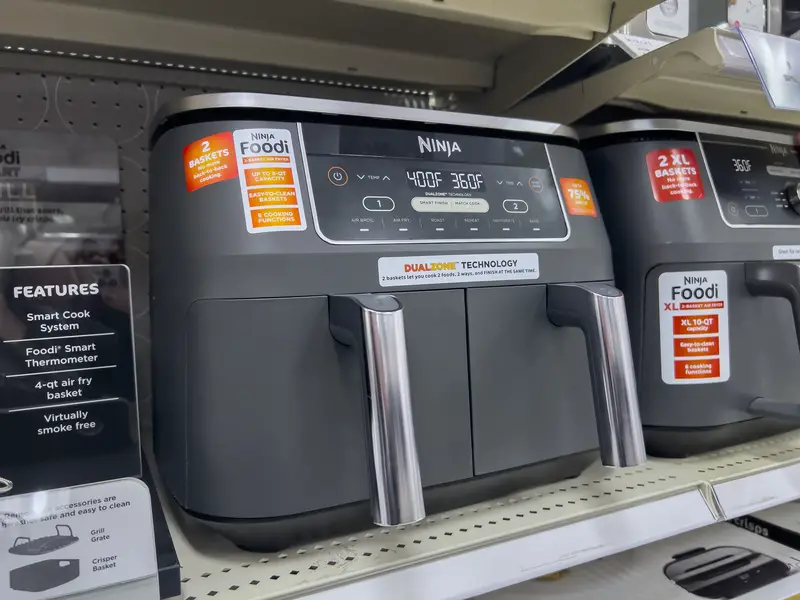
Air fryers have taken over kitchen counters everywhere, promising crispy food without the mess of deep frying. But here’s the thing – most people are making the same handful of mistakes that turn what should be perfectly crispy chicken wings into soggy disappointments. These gadgets seem foolproof, but they’re actually pretty picky about how you use them. The good news? Once you know what you’re doing wrong, fixing these issues is surprisingly simple and will completely transform your air frying game.
Cramming too much food into the basket
Picture this: you’re making dinner for the family and decide to throw all the chicken nuggets into the air fryer at once. It seems logical – why make multiple batches when everything fits? Unfortunately, this approach practically guarantees disappointing results. Air fryers work by circulating hot air around your food, and when pieces are touching or stacked on top of each other, that air can’t reach every surface.
The result is uneven cooking where some pieces are perfectly crispy while others remain soggy or undercooked. Experts recommend cooking in single layers with space between pieces, even if it means making two batches. Yes, it takes a few extra minutes, but the difference in results is dramatic. Your food will cook evenly, get properly crispy, and actually taste like it’s supposed to.
Using nonstick cooking spray ruins the coating
Most air fryer baskets come with a nonstick coating, so it makes sense to give them a quick spray to prevent sticking, right? Wrong. Those convenient cooking sprays contain propellants and chemicals that can actually damage your air fryer’s nonstick surface over time. The coating will start to peel or become less effective, making cleanup harder and potentially affecting the taste of your food.
Instead of reaching for that aerosol can, try brushing a small amount of oil directly onto your food or investing in a refillable oil spray bottle. Food experts suggest using avocado oil because it has a high smoke point and won’t break down at higher temperatures. For many foods like frozen items or fatty meats, you won’t need any oil at all since they already contain enough fat to prevent sticking.
Forgetting to shake or flip food mid-cooking
Air fryers aren’t slow cookers – you can’t just set them and walk away. One of the biggest mistakes people make is treating their air fryer like a microwave, putting food in and ignoring it until the timer goes off. This hands-off approach leads to food that’s perfectly cooked on one side and barely touched on the other. The hot air circulation is good, but it’s not magic.
Most recipes benefit from at least one flip or shake halfway through cooking time. Cooking guides recommend checking your food at the halfway point and giving the basket a good shake or flipping larger pieces with tongs. This simple step ensures even browning and prevents one side from overcooking while the other stays pale. Set a timer for the halfway point so you don’t forget – your future self will thank you when everything comes out evenly golden.
Choosing the wrong size for your household
Size matters when it comes to air fryers, and many people either go too small or too large for their actual needs. Buying a tiny air fryer for a family of four means you’ll be cooking in endless batches, while getting a massive unit for just two people wastes counter space and energy. The key is thinking realistically about how much food you’ll typically cook at once, not just what looks good in the store.
Consider your cooking habits honestly. If you’re meal prepping for the week, a larger capacity makes sense. But if you’re just making quick snacks or cooking for one or two people, a compact model will serve you better. Kitchen experts suggest thinking about your most common air fryer meals and choosing a size that accommodates those without requiring multiple batches. Remember, you can always cook less food in a bigger basket, but you can’t fit more food in a smaller one.
Skipping the cleaning between uses
Nobody likes cleaning kitchen appliances, but air fryers need regular cleaning to work properly and safely. Leftover grease and food particles don’t just disappear – they build up over time and can create smoke, bad smells, and even fire hazards. Plus, old grease can make your new batch of food taste off or transfer unwanted odors between different types of food.
The good news is that cleaning an air fryer isn’t nearly as annoying as cleaning a traditional deep fryer. Most baskets and trays are dishwasher safe, making cleanup pretty straightforward. Maintenance experts recommend wiping down the interior after each use and doing a thorough cleaning weekly if you use it regularly. A few minutes of cleaning after each use prevents the buildup that makes deep cleaning necessary later.
Using too much or too little oil
Oil confusion is real when it comes to air frying. Some people dump oil on everything thinking it will make food crispier, while others avoid oil completely and wonder why their vegetables come out dried and their breading falls off. The truth is somewhere in the middle – different foods need different amounts of oil, and sometimes none at all. Frozen foods usually have enough oil already, while fresh vegetables often need just a light coating.
Raw vegetables like broccoli or potatoes benefit from a light brush of oil to prevent them from drying out, but you don’t need much. Cooking specialists note that breaded items definitely need some oil to help the coating crisp up and prevent it from becoming cardboard-like. The key is using just enough to do the job without creating a greasy mess that defeats the purpose of air frying in the first place.
Cooking foods that are too light or small
Air fryers have powerful fans, and those fans can turn lightweight foods into a chaotic mess inside your machine. Kale chips can go flying around the basket, small pieces of food can slip through the holes, and light items like fresh herbs can end up stuck to the heating element above. This doesn’t just ruin your food – it can also create safety issues and damage your air fryer.
The solution isn’t to avoid these foods entirely, but to secure them properly. Air fryer guides suggest using parchment paper liners for small items or placing a heat-safe rack on top of lightweight foods to keep them in place. For things like quesadillas or sandwiches, toothpicks can prevent them from flying open mid-cook. A little preparation goes a long way toward preventing food disasters.
Ignoring temperature and timing guidelines
Every air fryer is slightly different, but many people ignore this fact and stick rigidly to recipe temperatures and times. What works perfectly in one model might overcook or undercook food in another. Air fryer wattage, basket design, and heating element placement all affect cooking performance. Treating all air fryers the same way is like assuming all ovens cook identically – they just don’t.
Start with recipe guidelines but be prepared to adjust based on your specific model and preferences. Keep notes about what works for your favorite foods and your particular air fryer. Experienced users recommend checking food a few minutes before the suggested time is up, especially when trying something new. It’s much easier to cook food a little longer than to fix something that’s already overcooked.
Only using it for frozen convenience foods
Air fryers excel at heating frozen chicken nuggets and french fries, but limiting them to just reheating convenience foods is like using a smartphone only for making calls. These machines can roast vegetables, cook fresh meat, bake small batches of cookies, and even reheat leftover pizza better than a microwave. Many people buy an air fryer and then only use it for the same two or three frozen items over and over.
Branch out and try cooking fresh ingredients. Air fryers make excellent roasted vegetables, perfectly cooked chicken breasts, and can even handle small portions of fish or pork. Recipe developers suggest experimenting with different types of food to really get your money’s worth from the appliance. The versatility might surprise you, and you’ll find yourself using it much more often once you realize how many different things it can handle well.
Getting the most out of your air fryer isn’t rocket science, but it does require avoiding these common pitfalls that trip up so many home cooks. The difference between soggy, disappointing results and perfectly crispy, evenly cooked food often comes down to these simple fixes. Take the time to learn your specific model’s quirks, give your food the space and attention it needs, and don’t be afraid to experiment beyond frozen convenience foods.
