

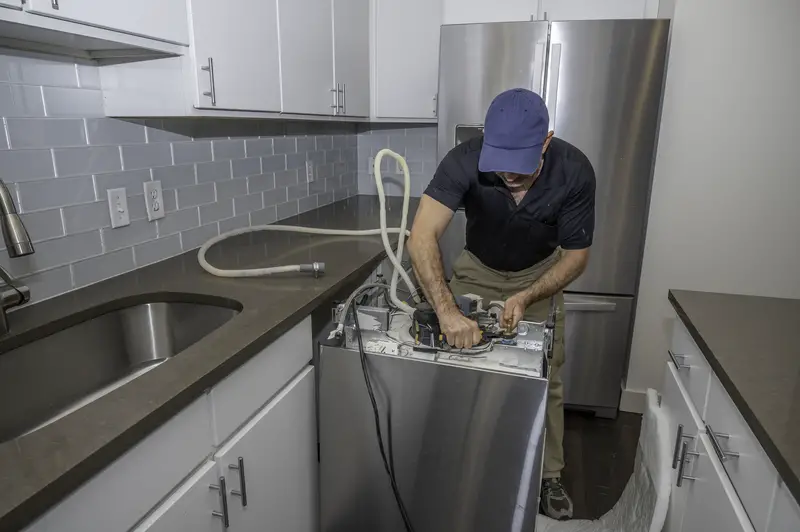
Nobody thinks about their dishwasher until it stops working. And when it does — water leaking across the kitchen floor at 10 p.m. on a Tuesday, or dishes coming out dirtier than they went in — you start questioning every decision you’ve ever made. Especially the one where you picked a brand based on whatever was on sale at Lowe’s that weekend.
Here’s the thing: appliance repair technicians see the same brands rolling through their service calls over and over again. They know which machines are built to last and which ones are basically ticking time bombs held together with cheap plastic clips and wishful thinking. I dug into what repair pros, consumer data, and real owners are saying about the worst dishwasher brands on the market right now — and a few that are actually worth buying instead.
Viking: The Overpriced Disappointment
Viking has a reputation as a luxury brand, and that reputation lets them charge luxury prices. Their dishwashers can run $1,200 to $2,000 or more. But according to multiple repair experts and appliance reviewers, Viking dishwashers don’t come close to justifying that cost. They’ve been flagged repeatedly for poor reliability, inconsistent cleaning performance, and parts that fail far sooner than they should at that price point.
The problem with Viking is that you’re paying for a name that got famous for ranges, not dishwashers. Their professional-style cooktops earned real credibility. But when they expanded into dishwashers and other appliances, the quality didn’t follow. Repair techs say Viking dishwashers end up with control board failures, pump issues, and leaking door seals — the kind of stuff that costs $200-$400 per repair visit. When your $1,800 dishwasher needs a $350 fix in year two, that “luxury” label starts to feel like a bad joke.
Haier: Budget Pricing With Budget Results
Haier is a Chinese-owned brand (they actually bought GE Appliances back in 2016) that positions itself as a budget-friendly option. You can find their dishwashers for as low as $350-$500, which sounds great if you’re trying to outfit a rental property or just need something cheap and fast. But repair professionals keep flagging Haier as one of the least reliable brands on the market.
The common complaints are almost predictable at this point: poor wash performance, flimsy racks that rust or break, and motors that give out well before you’d expect. Finding replacement parts for Haier dishwashers can also be a pain. Not every repair shop stocks them, and ordering can mean waiting a week or more. When a $400 dishwasher needs a $250 repair and a two-week wait, most people just throw it out and buy something else. That’s not saving money — that’s just wasting it slower.
Amana: The Brand Time Forgot
Amana is owned by Whirlpool, and it’s basically their bargain basement line. Their dishwashers tend to sit in the $400-$600 range, and you get exactly what you pay for — which isn’t much. Amana dishwashers regularly show up on “worst of” lists, and repair technicians say they see them break down more frequently than other Whirlpool-made machines.
The main gripes are about cleaning power (or lack of it), noisy operation, and short lifespans. Some Amana models don’t even have a food grinder, which means you’re supposed to pre-rinse everything before loading. At that point, you’re doing most of the work yourself. The interiors are often plastic rather than stainless steel, which stains easily and can hold onto odors. If you’re looking at Amana because of the price, you’d be better off spending an extra $100-$200 on a mid-range Whirlpool model that uses better components and will actually last.
GE: A Mixed Bag That Leans Bad
This one hurts because GE is practically an American institution. Your grandparents probably had a GE dishwasher that lasted 20 years. But the modern GE appliance lineup — now manufactured under Haier’s ownership — has taken a hit in the reliability department. Standard GE dishwashers (not the GE Profile or GE Monogram lines) have been called out by repair experts for inconsistent build quality and higher-than-average failure rates.
The typical issues include motherboard failures, leaking tub gaskets, and wash arms that clog or crack. GE dishwashers in the $450-$700 range seem to be the worst offenders. The higher-end GE Profile models fare better, but you’re spending $900+ to get there, and at that price, there are more reliable options from other manufacturers. Repair techs on forums have pointed out that since the Haier acquisition, parts quality on base-model GE dishwashers has declined. That said, GE still sells a massive number of units, so the sheer volume of complaints may be partly a numbers thing. But the pattern is hard to ignore.
HotPoint: Frequent Breakdowns and Headaches
HotPoint is another GE subsidiary brand, and it sits at the absolute bottom of the pricing ladder — you can find HotPoint dishwashers for under $400 at Home Depot. The price is tempting, but appliance repair companies have specifically called out HotPoint for what one service company described as “a reliability disaster.” Frequent breakdowns, persistent leaks, and substandard cleaning performance are the recurring themes.
HotPoint dishwashers often lack features that have become standard in other budget brands — things like adjustable racks, soil sensors, and stainless steel tubs. The motors tend to be loud, and the machines don’t do a great job with dried-on food. If you’ve got a HotPoint right now and it’s working fine, enjoy it while it lasts. But if you’re shopping for a replacement, repair techs overwhelmingly say to spend a little more and go with something else.
So What Should You Actually Buy?
Repair technicians are surprisingly consistent when asked what they’d put in their own kitchens. The names that keep coming up are Bosch, Miele, and Whirlpool (the main Whirlpool brand, not its sub-brands like Amana).
Bosch dominates the mid-to-high-end market for a reason. Their dishwashers — especially the 300 and 500 series — are known for quiet operation, solid wash performance, and long lifespans. You’ll spend $800-$1,200, but repair pros say Bosch machines regularly run 8-12 years with minimal issues. The 100 series, their entry-level line around $550-$650, is also well-regarded as a reliable workhorse.
Miele is the gold standard if you’ve got the budget for it. Their dishwashers start around $1,300 and can go north of $2,500, but they’re engineered to last 20 years. That’s not marketing fluff — Miele actually tests their machines to a 20-year lifespan equivalent. Repair techs on appliance forums consistently rank Miele at or near the top for reliability.
Whirlpool’s mainline dishwashers — the ones actually branded as Whirlpool, not Amana or HotPoint — offer the best value for most people. Models in the $500-$800 range deliver solid cleaning, reasonable noise levels, and good reliability. They’re not flashy, but they work, and when they do need repair, parts are everywhere and cheap.
How To Avoid Getting Burned
A few practical tips from the people who fix these things for a living:
Skip the extended warranty and invest in the right brand instead. A $150 warranty on a $400 dishwasher that’s going to break anyway is just paying extra for the privilege of dealing with warranty claim headaches. Put that money toward a better machine in the first place.
Stainless steel tubs matter. Plastic tubs stain, hold smells, and don’t dry dishes as well. If you’re spending more than $500 on a dishwasher, make sure it has a stainless interior.
Don’t trust the “smart” features. Wi-Fi-connected dishwashers with app controls and cycle notifications sound cool. But every extra electronic component is one more thing that can fail. The smart module on a dishwasher adds $50-$100 to the price and is one of the most common failure points in modern machines. Unless you desperately need your phone to tell you the rinse cycle is done, skip it.
Check the decibel rating. Anything under 45 dB is considered quiet. Cheap dishwashers often run at 55-60 dB, which is roughly the volume of a normal conversation. If your kitchen opens into your living room — like it does in about 90% of homes built in the last 15 years — that noise level matters more than you think.
The Real Cost of a Cheap Dishwasher
Here’s the math that most people don’t do. A $400 dishwasher that lasts 4 years costs you $100 per year. A $900 dishwasher that lasts 10 years costs you $90 per year. And that’s before you factor in repair costs, water usage differences, and the value of your Saturday afternoon spent waiting for the repair guy.
The average dishwasher repair costs between $150 and $400, depending on the problem and your market. If a budget machine needs even one major repair during its short life, the economics tilt hard toward having bought something better from the start.
Repair technicians aren’t telling you to avoid these brands because they want to lose business. They’re telling you because they’re tired of replacing the same cheap pump on the same cheap machine for the third time in five years. When the people who fix dishwashers for a living tell you to stay away from certain names, it’s probably worth listening.
