

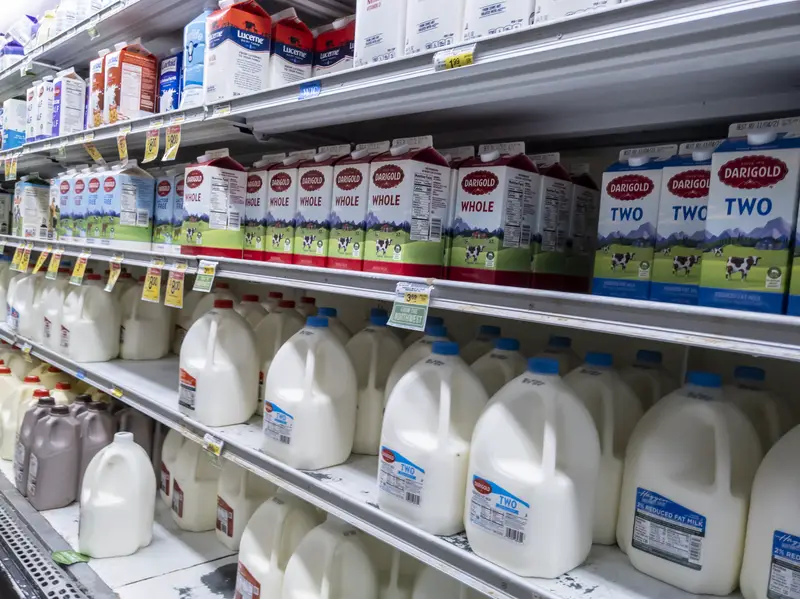
Milk shopping seems simple enough until you’re standing in the dairy aisle staring at dozens of options. While most people grab whatever’s cheapest or closest, some brands consistently leave shoppers disappointed with sour tastes, early spoilage, and questionable practices. Smart shoppers know which brands to skip and which ones deliver the creamy, fresh taste families expect every time they pour a glass.
Great Value milk spoils faster than advertised
Walmart’s Great Value milk might save money upfront, but many families end up wasting more than they save. The rock-bottom prices come with a catch that becomes obvious after the first few purchases. Multiple shoppers report the same frustrating experience: milk that smells off days before the expiration date and tastes bland even when fresh. The quality control issues seem widespread across different Walmart locations, making this a consistent problem rather than isolated incidents.
The most common complaint involves early spoilage that catches families off guard. Parents pour what looks like perfectly good milk only to discover it’s already turning sour. This creates waste and forces unexpected trips to the store for replacement milk. While the low price might seem appealing, the unreliable freshness makes Great Value milk a risky choice for households that don’t consume milk quickly. The savings disappear when half the gallon ends up down the drain.
Friendly Farms delivers inconsistent quality
Aldi shoppers love the store’s efficient service and budget prices, but Friendly Farms milk doesn’t live up to the chain’s usual standards. The unpredictability factor makes meal planning difficult since families never know if their milk will last the expected time. Some gallons stay fresh well past the expiration date, while others start turning before the printed date arrives. This inconsistency creates frustration for parents trying to pack school lunches or plan breakfast routines around reliable ingredients.
The freshness issues seem random rather than following any pattern shoppers can predict. Regular Aldi customers report buying identical products from the same store with completely different results. While Aldi excels at providing quality produce and pantry staples at low prices, milk represents one area where the store’s usual value proposition breaks down. Smart Aldi shoppers often grab their groceries there but stop elsewhere for dairy products to avoid the freshness lottery.
Horizon Organic faces misleading practice accusations
The organic label on Horizon products attracts health-conscious families, but the company’s practices don’t always match consumer expectations. Legal troubles have plagued the brand, including lawsuits over adding non-organic ingredients to supposedly organic milk. These controversies raise questions about whether families paying premium prices actually receive the organic benefits they’re seeking. The disconnect between marketing promises and actual practices leaves many parents feeling misled about their milk choices.
Despite the taste quality that keeps some families loyal, the questionable practices surrounding Horizon’s organic claims create trust issues. Parents who specifically choose organic products for their families expect transparency and authentic organic processes. When companies face repeated accusations about cutting corners on organic standards, it undermines confidence in the entire product line. Families paying extra for organic milk deserve better assurance that they’re getting what they pay for.
Borden milk tastes too rich for most families
Borden’s whole milk delivers an intensely rich taste that overwhelms many drinkers expecting standard milk consistency. The thick, creamy texture that some customers praise becomes a drawback for families accustomed to lighter dairy products. Children often reject the heavy mouthfeel, and adults find it too intense for everyday use like cereal or coffee. This richness factor makes Borden milk unsuitable for households looking for versatile, all-purpose dairy products that everyone will enjoy.
The extreme thickness extends beyond just whole milk to other Borden products like chocolate milk. Many reviewers describe the consistency as almost overwhelming, comparing it to drinking cream rather than milk. While some people enjoy this richness, most families prefer milk that works well for multiple uses without dominating every recipe or drink. Borden’s intensity makes it a niche product rather than a practical everyday choice for typical households seeking reliable, versatile dairy products.
A2 milk costs more without clear benefits
A2 milk commands premium prices based on claims about easier digestion, but most families don’t notice significant differences from regular milk. The higher cost puts strain on grocery budgets without delivering taste improvements that justify the expense. For families without specific digestive issues, the extra money spent on A2 products could buy more food elsewhere. The marketing suggests revolutionary benefits, but real-world experience often falls short of these promises for average consumers.
The price premium becomes particularly problematic for budget-conscious families who might sacrifice other grocery items to afford specialty milk. While some people with mild dairy sensitivities report improvements, the majority of consumers don’t experience enough difference to warrant the higher cost. The taste doesn’t surpass many conventional brands, making the expense hard to justify for families focused on getting good value from their grocery dollars. A2 milk works best for people with specific needs rather than general household use.
Land O’Lakes lacks important certifications
Land O’Lakes operates without organic or non-GMO certifications that many families now consider essential. The conventional farming practices and factory-style operations contrast sharply with smaller companies focused on quality and animal welfare. Families seeking milk from grass-fed or pasture-raised cows won’t find these options with Land O’Lakes products. The absence of these certifications signals different priorities that don’t align with what many modern consumers want from their dairy products.
Animal welfare investigations have revealed concerning practices at some Land O’Lakes supplier facilities, including inadequate cow care and questionable treatment methods. These findings trouble families who care about how their food is produced and want to support companies with ethical practices. The milk’s taste also receives mixed reviews, with many describing it as less creamy than preferred. Combined with the certification gaps and welfare concerns, Land O’Lakes doesn’t meet expectations for families willing to pay more for higher-quality dairy products.
Kirkland Signature packaging creates messy pours
Costco’s Kirkland milk tastes great and offers good value, but the square container design creates frustrating spills during every pour. The awkward shape makes controlled pouring nearly impossible, especially when the container is full. Families end up cleaning milk puddles from counters and tables after each use, turning a simple task into a cleanup chore. The packaging design seems better suited for storage efficiency than actual use by consumers in their homes.
The leaking problems extend beyond just difficult pouring to actual container defects that cause mess during storage. Many customers report containers that develop leaks in the refrigerator, creating additional cleanup and potential food safety concerns. While the milk quality itself rates well among Costco shoppers, the packaging issues make it impractical for daily use. Families who value convenience and cleanliness often choose milk brands with traditional, easy-pour containers instead of dealing with Kirkland’s design problems.
Trader Joe’s milk expires too quickly
Trader Joe’s organic milk carries premium prices but often arrives at stores with expiration dates just days away. This short shelf life creates pressure for families to consume milk quickly or risk waste. The timing works against typical household milk consumption patterns, where gallons might last a week or more. Shoppers frequently discover their expensive organic milk spoiling before they’ve used even half the container, making the high price even more frustrating.
The consistently short sell-by dates suggest inventory management issues rather than occasional problems. Regular Trader Joe’s shoppers report the same experience repeatedly, indicating systematic rather than random occurrences. While the store excels at unique products and competitive prices in other categories, milk represents a weak spot in their offerings. Families who shop at Trader Joe’s for specialty items often buy their milk elsewhere to avoid the freshness timeline pressure and reduce grocery waste.
Smart milk shopping means avoiding brands with consistent quality problems and choosing options that deliver reliable freshness and taste. Whether dealing with early spoilage, packaging issues, or questionable practices, these problematic brands create unnecessary frustration for families just trying to keep milk in the refrigerator. Better alternatives exist that provide the consistent quality and value most households need for their daily dairy requirements.
