

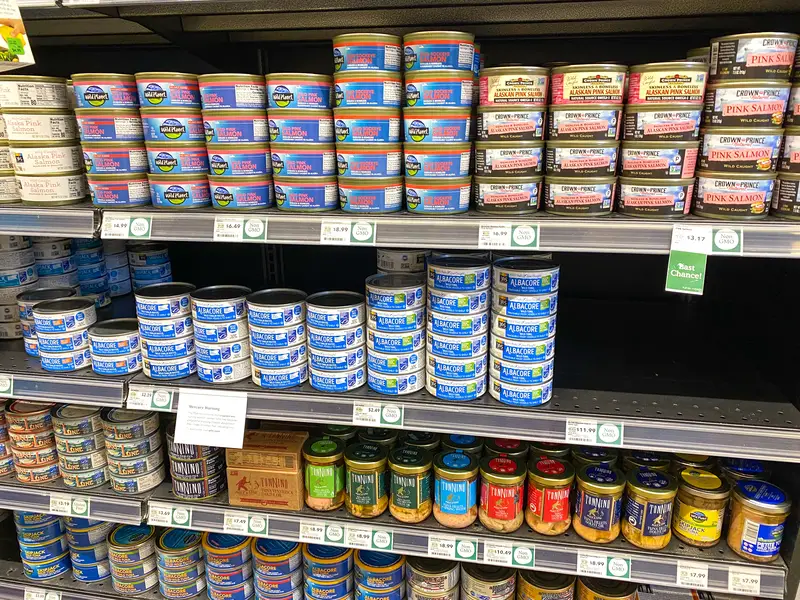
Most people standing in the canned fish aisle probably think all tuna is pretty much the same. You grab a can, toss it in your cart, and move on with your day. But here’s something that might surprise you: what’s printed on that label can mean the difference between a safer choice and one that’s loaded with way more mercury than you’d want. Some types of tuna have mercury levels five times higher than others, and the only way to know what you’re getting is to actually read what’s on the can before you buy it.
The type of tuna matters more than you think
Walk down any grocery store aisle and you’ll see cans labeled “light tuna,” “white tuna,” “chunk light,” and “solid white.” These aren’t just different ways of saying the same thing. They actually refer to completely different species of fish, and each one has wildly different mercury levels. Light canned tuna usually comes from skipjack, which is smaller and has lower mercury levels at around 0.126 parts per million. White or albacore tuna, on the other hand, is a much larger fish that lives longer and accumulates more mercury over its lifetime.
The size of the fish is actually the key here. Bigger tuna live longer, and the longer they’re swimming around in the ocean, the more mercury builds up in their bodies. Yellowfin and bigeye tuna can have mercury concentrations around 0.354 PPM or higher, while skipjack stays nice and low. If you’re someone who eats tuna regularly, maybe making sandwiches a couple of times a week, sticking with light tuna instead of white could make a real difference. It’s not that you can’t ever eat albacore, but knowing what you’re getting helps you make better choices about how often you eat it.
How the fish was caught changes everything
You might not think the fishing method matters much when you’re just trying to make lunch, but it actually tells you a lot about what’s in that can. Some labels will say things like “pole and line caught” or “pole caught,” which means someone literally caught that fish one at a time with a fishing rod. This method tends to be more selective, catching fewer unwanted species like turtles or sharks in the process. Other cans might say “troll caught,” which is similar but uses rubber lures instead of live bait, making it even more targeted.
Then there are the fishing methods that companies don’t advertise quite as loudly. Longlines stretch for miles and use thousands of hooks, catching pretty much anything that swims by. If a can doesn’t tell you how the tuna was caught, that’s usually not a great sign. Some companies use large nets called purse seines that circle entire schools of fish and scoop them all up at once. While this method is efficient, it can also catch a lot of other sea life depending on how it’s done. The fishing method won’t affect the mercury content, but it does give you insight into whether the company is being upfront about their practices or trying to hide something.
Those dolphin-safe logos don’t tell the whole story
Almost every can of tuna you see these days has a little dolphin-safe logo on it. Most people assume this means the tuna was caught responsibly and nothing got hurt in the process. The reality is a bit more complicated. That dolphin-safe label is regulated by U.S. law and specifically means that dolphins weren’t chased, surrounded, or killed during the fishing process. That’s definitely a good thing, but it doesn’t say anything about what happened to sea turtles, sharks, rays, or seabirds that might have gotten caught in the same nets or on the same fishing lines.
Some labels go further and mention things like “turtle-safe” or call out specific gear modifications like circle hooks, which are designed to reduce the chance of accidentally catching sea turtles. If you see terms like “FAD-free” or “free school caught,” that’s actually worth paying attention to. FADs are floating platforms that attract fish, making them easier to catch in big groups, but they also tend to attract a lot of other marine life that ends up getting caught too. Companies that avoid using FADs and make a point of saying so on their labels are generally being more selective about what they’re pulling out of the water.
Oil versus water makes a bigger difference than taste
Open up a can of tuna packed in water, and you’ll notice it’s pretty dry and flaky. Tuna packed in oil, whether it’s vegetable oil, olive oil, or soybean oil, tends to be moister and richer. But there’s more going on here than just how it tastes on your sandwich. When tuna is packed in water, some of the natural oils and nutrients from the fish actually leach out into that water, which most people just drain down the sink. You’re literally pouring some of the good stuff away without realizing it.
Oil-packed tuna keeps those nutrients locked in because they dissolve into the oil instead of leaching out. The oil also helps preserve the natural taste of the fish better than water does. Of course, oil-packed tuna has more calories and fat than water-packed, which is why a lot of people avoid it. But if you’re not worried about the extra calories and you want to get more out of your fish, oil-packed options might be worth considering. Some brands even use high-quality olive oil, which can actually be pretty tasty if you’re making something like a tuna salad where you want more richness.
Generic brands aren’t always cheaper in the long run
It’s tempting to grab the cheapest can of tuna on the shelf, especially when you’re trying to stretch your grocery budget. But the least expensive cans sometimes cut corners in ways that aren’t immediately obvious. Some cheaper brands use lower-quality canning materials that might contain BPA, a chemical that can leach into your food. BPA has been linked to various health concerns, and while many companies have moved away from it, not all of them advertise that fact clearly on their labels.
The quality of the actual fish can vary, too. Some budget brands mix different species together or use smaller, less desirable pieces. You might also find that the cheap stuff is packed in more water or has less actual tuna per can, so you’re not really saving as much as you think. Look for cans that specifically say “BPA-free” on the label if you’re concerned about the packaging. And while you don’t have to buy the most expensive brand on the shelf, spending an extra dollar or two for a mid-range option often gets you better quality fish and safer packaging materials that are worth the small price difference.
Skipjack is the species you should look for
If you had to pick just one type of tuna to buy regularly, skipjack would be your best bet for several reasons. First, it’s the smallest of the commercial tuna species, which means it doesn’t live as long and doesn’t accumulate as much mercury. Second, skipjack populations are doing really well compared to other types of tuna. They reproduce quickly and bounce back fast even with heavy fishing, so there’s less concern about running out of them. Most chunk light tuna is made from skipjack, though some brands mix in yellowfin or bigeye too.
The tricky part is that not all light tuna is pure skipjack. Some companies label their cans as “chunk light” but don’t specify exactly which species is inside. If the label just says “light tuna” without mentioning skipjack specifically, there’s a chance you’re getting a mix that includes fish with higher mercury levels. The best cans will actually say “skipjack” somewhere on the label. If you can find that word printed on there, you know you’re getting the smaller, lower-mercury option that’s also more plentiful in the ocean. It might take an extra minute to check, but it’s worth it if you eat tuna more than once in a while.
Certification logos actually mean something specific
Those little circular logos and certification stamps on tuna cans aren’t just there to make the packaging look fancy. Different organizations certify tuna based on specific standards, and knowing what those logos mean can help you make more informed choices. The Marine Stewardship Council, or MSC, is considered one of the most rigorous certifiers. Their blue fish logo means the tuna came from fisheries that maintain good fish populations, try to minimize damage to the ocean, and have decent management practices throughout the supply chain.
Fair Trade USA is another certification you might see, which focuses more on making sure the people catching the fish are treated fairly and paid decent wages. Some labels just say things like “sustainably caught” or “responsibly sourced” without any third-party certification backing it up, which doesn’t really mean much. Anyone can print those words on a can. The logos from recognized organizations actually require companies to meet specific standards and submit to audits. If you see a can covered in vague claims but no actual certification stamps from known organizations, that’s a red flag that the company might just be trying to sound good without actually doing anything different.
Cans versus pouches is about more than convenience
Those squeezable tuna pouches seem super convenient because you don’t need a can opener and they’re lighter to carry around. But they come with some downsides that might not be worth the convenience factor. First, they’re almost always more expensive per ounce than canned tuna. You’re paying extra for that fancy packaging. Second, because there’s no rigid structure protecting the fish, the tuna inside pouches can get mushed up pretty easily if the pouch gets squished in your bag or backpack.
Traditional cans also tend to have a longer shelf life, lasting up to four years versus the shorter shelf life of most pouches. Some of the newer cans even come with pop-top lids, so you get the convenience of not needing a can opener while still getting the protection and better value of a can. The most important thing to check, whether you’re buying cans or pouches, is that the packaging is BPA-free. Both formats can have this issue, but cans had the problem more commonly in the past. These days, most major brands have switched to BPA-free linings, but it’s still worth checking the label just to be sure.
The country of origin tells you about quality standards
Every can of tuna sold in the United States has to say somewhere on it where the fish came from. This isn’t just random information. Different countries have different standards for how they catch, process, and can their seafood. European countries, particularly Spain, Portugal, and Italy, have centuries-old traditions of canning fish and generally use pretty high standards. Their tuna is often caught using more selective methods and processed with better quality control.
Tuna from Southeast Asian countries like Thailand is more common in grocery stores because it’s usually cheaper, but quality can vary a lot depending on the specific company. Some Thai canneries meet high standards while others cut corners. The United States also cans tuna domestically, particularly from boats fishing off the California coast. American Samoa is another major processing location. Reading where your tuna comes from and doing a bit of research on that brand can tell you a lot about what you’re really getting. If a company is proud of its sourcing and processing, it’ll usually make it pretty clear on the label. If that information is hidden in tiny print on the back or hard to find, that might tell you something, too.
Next time you’re standing in front of those rows of tuna cans, take an extra minute to actually read the labels. Check what species is inside, look for words like skipjack or pole-caught, and see if there are any real certifications from organizations you’ve heard of. The difference between the best and worst options on that shelf isn’t just about price or brand recognition. A little label-reading can help you pick tuna that’s lower in mercury, caught more responsibly, and better quality overall, all without spending a ton of extra money or time.
